
How Black Pepper Is Grown in Wayanad: From Sapling to Harvest
By Shameer, Co-founder, Seeds and Hands
Black pepper from Wayanad doesn't carry its reputation by luck. Talk to any farmer up in those hills, and they'll tell you the same thing: this land is suitable for pepper. Sitting at an elevation of 700 to 2,100 metres above sea level, Wayanad has a moderate climate with abundant rainfall and cool temperatures, and its red laterite soil, rich in organic matter, is ideal for growing spices like black pepper. What follows is a ground-level look at how black pepper actually grows here — from the moment a cutting is taken off a mother vine to the day dried peppercorns go into storage.
Why Wayanad is ideal for black pepper cultivation

Wayanad sits in the Western Ghats, tucked into Kerala's highland belt. It gets good monsoon rain without the waterlogging problems that plague lower elevations. Temperatures stay cooler than coastal Kerala, which slows plant stress. Red lateritic soils and alluvial soils rich in humus are highly suitable for pepper, with an ideal pH range of 4.5 to 6.5.
Wayanadan pepper is very famous in the world of spices and finds a good market both in India and abroad. Pepper vines are fussier than they look — too much standing water and the roots rot, too much heat and the plant struggles to flower. Wayanad sits in a sweet spot that most growing regions don't naturally offer.
Understanding the black pepper plant

Black pepper (Piper nigrum) is a flowering vine in the family Piperaceae — a woody climber that can reach up to 10 metres in height using its aerial roots, with a single stem typically bearing 20 to 30 fruiting spikes. It won't stand on its own; it needs something to grow against, which is why in Wayanad, vines climb support trees in a traditional agroforestry system that local farmers have refined over generations. It's a perennial plant with a total lifespan of over 30 years, though its productive commercial window runs between 12 and 20 years. That's not a short-term crop — it's a long-term commitment.
Step 1: Selecting and preparing pepper saplings
Commercial pepper in Wayanad isn't grown from seeds — it's propagated through stem cuttings taken from runner shoots of proven mother vines. Cuttings from lateral branches are rarely used because vines raised from them tend to be short-lived and bushy rather than strong climbers. Farmers are selective: only cuttings from high-yielding, disease-free plants make the cut, and any sign of fungal spotting means immediate rejection. The selected cuttings go into raised nursery beds or polybags filled with a mix of soil, river sand, and decomposed organic matter, where they stay in partial shade for two to three months until the roots are strong enough for field planting.
Step 2: Field planting in Wayanad
Planting in Wayanad happens at the start of the monsoon — June through July — when the soil is naturally moist and young roots can establish without extra irrigation. Pits are dug close to the base of support trees, spaced roughly two to three metres apart, and each pit is enriched with compost or well-rotted manure before the sapling goes in. Getting this foundation right matters more than most people realise — poor soil prep at planting quietly shows up years later in yield. Young vines are loosely tied to their support at first, and as they grow the tendrils take over. The most common support trees in Kerala include grey downy balsam, silver oak, and Indian coral trees, while arecanut and coconut are also widely used across Wayanad's intercropping systems.
Step 3: Growth phase and maintenance
Pepper vines don't fruit immediately — they typically start yielding from the third or fourth year, which means the first two years are entirely about establishment. The vine is putting down roots, building structure, and finding its way up its support, not producing anything. From the third year, initial flowering begins, and by the fourth year onwards, yields become consistent and stable. Through all of this, farmers stay active: mulching to hold soil moisture, pruning to improve airflow through the canopy, and applying organic manure — compost, cow dung, green manure — on a seasonal cycle. Many growers in Wayanad have quietly moved away from heavy chemical inputs over the years, less out of trend and more out of experience: healthier soil simply keeps the vine producing longer.
Step 4: Pest and disease management
The monsoon brings the heaviest disease pressure, and the two problems farmers here watch most closely are root rot and phytophthora wilt — both thrive in wet, poorly drained soil and can spread fast if not caught early. The approach in Wayanad is largely preventive: maintaining proper drainage around root zones, starting with clean planting material, and keeping a close eye on soil health through the growing season. The Spices Board of India, which operates a field office in Kalpetta in the heart of Wayanad, provides research-backed guidance to local farmers on disease management and crop improvement — and most growers follow these recommendations rather than reaching for broad-spectrum chemicals that damage the soil biology they've spent years building.
Step 5: Flowering and pepper formation
In Kerala, pepper vines flower in May and June, and from that point the crop takes six to eight months to reach harvest-ready maturity. Small, pale flowers appear on thin spikes that hang from the vine, each spike carrying dozens of individual berries. What makes timing the harvest genuinely tricky is that ripening is asynchronous — on the same bunch, you can have immature green berries sitting right next to overripe red ones at the same time. Farmers watch the colour shift closely: the berries start bright green, move through a pale yellowish-green, and then a few on each spike turn red. That red is the signal.
Step 6: Harvesting black pepper in Wayanad
Harvest season in Wayanad runs from November through to March, though the exact window shifts with elevation — farms on the lower slopes tend to finish earlier, while those higher up carry on into late February or March. The harvest itself is entirely manual. Workers move through the vines and pick whole spikes the moment one or two berries on a spike turn bright red. It sounds straightforward, but reading ripeness accurately across thousands of spikes on a working farm takes real, accumulated experience. Pick too early and the pungency never fully develops. Wait too long and the berries drop, or the volatile aroma compounds begin to degrade. It's the most labour-intensive stage of the entire growing process, and it's also the one where quality is most easily lost.
Step 7: Post-harvest processing
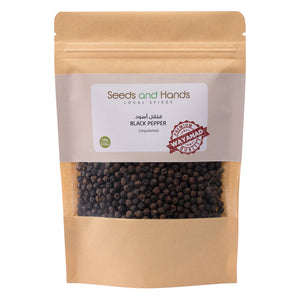
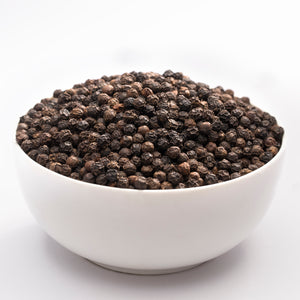
Fresh pepper berries come off the vine green and soft — they look nothing like the black peppercorns sold in stores, and the transformation happens entirely through drying. After the berries are separated from the spikes, many farmers dip them briefly in boiling water for about a minute, which helps achieve a more uniform colour through the batch. Then they're spread out on mats and left to sun-dry for seven to ten days, turned regularly so moisture leaves evenly. As drying progresses, the outer skin wrinkles and darkens — that's the characteristic look of commercial black peppercorns forming. Once fully dried, the pepper goes into cool, dry, well-ventilated storage, away from moisture, which is the primary threat to both aroma and shelf life. Stored correctly, a good batch of Wayanad pepper holds its quality for well over a year.
Why our black pepper is different

Most commercially sourced pepper passes through several hands before it reaches you. Ours comes directly from Wayanad farms that use traditional climbing methods, harvest at the right time — not the convenient time — and sun-dry the full 7 to 10 days without shortcuts. No blending with pepper from other origins, no compromising on drying time to move product faster.
Wayanad black pepper is bold, pungent, and full of essential oils, with high piperine content that makes it highly valued in both Indian kitchens and international markets. That difference shows up clearly in the kitchen.
How to use it best
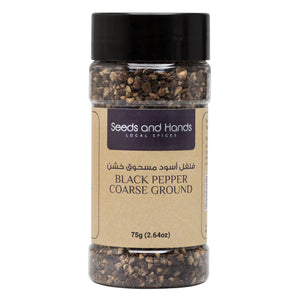
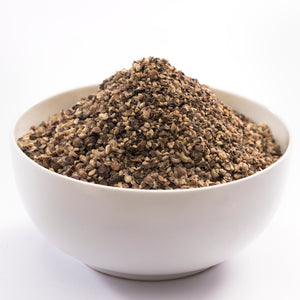
Crush it fresh just before you add it — that's when the aroma is strongest. Add it near the end of cooking if you want heat without bitterness. Works well in curries, grilled meat, soups, spice rubs, and honestly, just cracked over a fried egg.
Once you've cooked with properly grown, well-dried Wayanad pepper, the pre-ground stuff in a plastic jar is hard to go back to.
Final takeaway
Growing black pepper in Wayanad isn't complicated, but it isn't quick either. Every stage — choosing the right cutting, preparing the soil, managing the vine through years of growth, timing the harvest, sun-drying for the full duration — has a direct impact on what ends up in your kitchen. Farmers here have been doing this long enough to know that cutting corners shows up eventually, either in lower yields or weaker flavour.
That's the reality of patient farming. And it's why Wayanad pepper is worth paying attention to.
About the author
Shameer serves as the Co-founder of Seeds and Hands, a spice company dedicated to sourcing single-origin, low-pesticide, and zero-pesticide spices directly from farmers. With extensive experience working alongside spice cultivators in Wayanad, Kerala, he has played a key role in building transparent, quality-driven sourcing networks.
His understanding of spice cultivation is shaped by close relationships with farming communities and hands-on involvement in sourcing and quality assessment, enabling Seeds and Hands to connect conscious consumers with authentic, responsibly sourced spices.
References
[1] Wikipedia — Black pepper (Piper nigrum) Covers plant biology, propagation, harvesting, and post-harvest processing. Comprehensive and regularly updated-Sources
[2] Spices Board of India (indianspices.com) — Pepper crop profile and cultivation practices The official Government of India body for spice development. Covers Piper nigrum biology, medicinal properties, and cultivation guidelines-Sources
[3] IndiaAgroNet — Black pepper cultivation guide Detailed practical guide covering propagation from runner shoots, planting, flowering timelines, harvest method, and the 7–10 day sun-drying process-Sources
[4] PlantVillage, Penn State University — Black pepper (Piper nigrum) crop information Peer-reviewed crop database covering commercial lifespan (12–20 years), climate requirements, soil pH, disease management, and propagation methods-Sources
[5] Encyclopaedia Britannica — Black pepper plant Authoritative reference covering taxonomy, cultivation history, harvesting, and processing of black pepper from the Malabar Coast-Sources