
From Kerala Farms to Your Kitchen: The Seeds and Hands Story
By Shajahan, Co-Founder, Seeds and Hands
When you open a packet of spices and sprinkle them into your cooking, it feels effortless. But long before that moment, each spice passes through a deliberate, carefully managed journey — one that begins not in a factory, but in a conversation with a farmer.
At Seeds and Hands, we believe the quality of a spice is decided long before it reaches any processing facility. It is decided in the field, by the people who grow it, and by the choices made at every step of sourcing.
That is why everything we do is built around three steps. Not dozens of checkboxes or complicated supply chain systems — just three clear, honest steps that ensure every spice we bring to you is genuinely worth calling kitchen-ready.
It all begins at the farm

Step 1: Finding where each spice grows best naturally
Kerala is one of the world's great spice regions, but within Kerala, quality is not uniform. The cardamom grown at a certain altitude in the Wayanad hills carries an intensity that cardamom from lower elevations simply cannot match. The black pepper from a specific valley has a heat and aroma that sets it apart from pepper grown just a few kilometres away.
Soil, altitude, rainfall, shade — all of these invisible factors shape the character of a spice. And the only people who truly understand these nuances are the farmers who have spent their lives working this land.
This is why Step 1 is not about visiting markets or browsing supplier catalogues. We take the help of our farmer friends to find out the places where each spice is grown best naturally.
These are long-standing relationships built on trust and shared knowledge. Our farmer network spans growing regions across Kerala, and through years of working alongside these communities, we have built a detailed understanding of which land produces the best crop for each spice — and why.
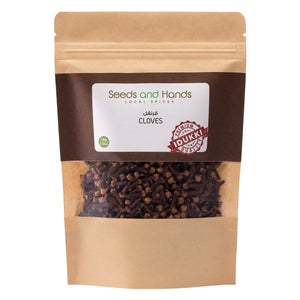
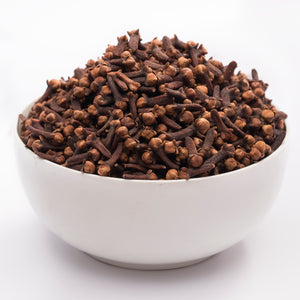
When it is time to source cardamom, black pepper, cloves, mace, or any other spice, we do not guess. We ask the people who know.
This geographic intelligence is the foundation of everything else. Because no amount of processing or packaging can fix a spice that was sourced from the wrong place to begin with.
Initial inspection and sorting

Step 2: Cherry-picking farmers who farm the right way
Knowing where to find great spices is only half the equation. The other half is knowing who is growing them responsibly.
This is where Step 2 begins — and it requires us to travel.
We visit farms personally. We observe how the land is managed, how pesticides are used or avoided, and how the farmer approaches the relationship between agriculture and nature. We ask detailed questions. We look at the crop directly. We make our own assessment before any sourcing decision is made.
We travel and cherry-pick farmers who follow organic farming practices. And some of our spices come from certified organic farms.
This is not a passive process. We are not simply ticking boxes or accepting certifications at face value. We are building ongoing relationships with individual farmers who share our commitment to growing spices the way they were always meant to be grown — with minimal intervention, respect for the soil, and a focus on natural quality over forced yield.
The farmers who make it into our network are those who prioritize the health of their land. They minimize or eliminate synthetic pesticide use. They follow natural growing cycles. Many of them have practiced these methods for decades, long before "organic" became a marketing term.
Once harvested spices arrive at our facility, they undergo a thorough physical inspection. Every batch is visually examined. Foreign materials are removed. Damaged or discolored pieces are separated. Spices are graded by size and appearance before moving forward. Human sorting plays a central role here because trained eyes consistently catch what machines miss.
The combination of careful farmer selection in the field and rigorous physical inspection at intake means that by the time a spice moves to the next stage, it has already passed two critical human filters — both built on observation, experience, and accountability.
Drying: Protecting aroma and shelf life

Freshly harvested spices carry natural moisture that, if not managed carefully, becomes a threat to everything that makes them valuable. Excess moisture leads to mold, bacterial growth, and flavor loss. But aggressive drying damages the volatile oils that give spices their aroma and depth.
We use traditional sun-drying and controlled dehydration methods to bring moisture levels within safe limits while protecting essential oils. Moisture is monitored carefully at every point. This stage requires patience — rushing it can undo months of careful farming and sourcing work in a matter of days.
Processing with care, not speed
Different spices require different handling, but the guiding principle is always the same: care over speed.
Some spices are kept whole. Others are cleaned and ground under controlled conditions. What never changes is our commitment to no artificial coloring, no fillers, and no unnecessary additives. Each spice is processed separately to prevent cross-contamination. Grinding happens in clean environments specifically to avoid overheating — because heat destroys the volatile compounds responsible for flavor and aroma.
Every decision at this stage protects what nature already created. The goal is not to enhance or mask. The goal is to deliver the spice as close to its natural best as possible.
Quality testing and safety checks

Step 3: Lab testing based on international food standards
This is the step that turns good intentions into verified reality.
We collect samples from our farmers and send them for laboratory testing based on CODEX — the international food safety standard developed by the Food and Agriculture Organization and World Health Organization. This is the same standard used by professional food manufacturers and specialty retailers around the world.
Testing covers pesticide residue levels, microbial safety, moisture content, and physical purity. Results are documented and reviewed before any batch is cleared for packaging. There are no exceptions to this process, and no batch moves forward on assumption alone.
For the businesses and consumers we supply — tea blenders, food manufacturers, home cooks who care about what goes into their food — this lab verification offers something increasingly rare: proof. Not packaging language, not claims, but third-party scientific confirmation that the spice is safe, clean, and true to its origin.
This is what separates kitchen-ready spices from raw agricultural produce. And it is why we built this step into the heart of our process rather than treating it as an afterthought.
Quality is documented, not assumed.
Hygiene and packaging
Once a batch clears quality testing, it moves to packaging — the final protective step between farm and kitchen.
The facility operates under strict hygiene protocols. Clean storage areas, food-grade handling systems, and careful sealing procedures ensure that nothing compromises the spice after all the work that produced it. Packaging is designed to protect aroma, prevent moisture absorption, maintain freshness, and extend shelf life. Spices are sealed in food-safe materials built to withstand transport and storage.
Packaging is not branding. It is protection — the last responsibility we carry before a spice reaches you.
What does " kitchen-ready " actually mean?
A spice earns the label kitchen-ready only after completing every stage of this journey. It was sourced from the right location. It came from a farmer who grows responsibly. It was physically inspected and properly dried. It was hygienically processed without additives. And it was verified by an independent laboratory against international food safety standards.
Anything short of this is simply raw agricultural produce.
Why this process matters to you
The care that goes into sourcing and processing has a direct impact on your cooking. When spices are handled correctly, you need smaller quantities to achieve better flavor. Dishes taste more balanced. Shelf life improves. And the health risks associated with pesticide residues and microbial contamination are significantly reduced.
Good spices do not need heavy seasoning to compensate for weakness. Their natural aroma does the work.
For food manufacturers and tea blenders, this consistency is not just desirable — it is essential. Reliable spices produce reliable products, batch after batch.
Building trust through traceability

People today care about the origin of what they eat. And that care deserves a real response — not marketing language, but documented accountability.
Seeds and Hands maintains traceability from farm to finished product. Every step in our three-step process is recorded. Farmer sourcing decisions, regional growing knowledge, lab results, and processing records create a chain of accountability that we stand behind entirely.
Direct farmer relationships paired with third-party lab verification mean that transparency is built into the process, not added on top of it.
Trust is built through documentation, not claims.
Final thoughts
Behind every flavorful dish is a spice that passed through many careful hands.
From identifying the regions where each spice grows best naturally, to personally vetting farmers who respect their land, to verifying quality through internationally recognized laboratory standards — each of our three steps exists to protect taste, safety, and integrity.
The next time you reach for a spice, that tiny pinch carries within it months of farming knowledge, responsible cultivation, and careful, documented verification.
That quiet journey is what transforms nature into taste.
That is the moment a spice becomes kitchen-ready.
About the author
Shajahan serves as the Co-founder of Seeds and Hands, a spice company dedicated to sourcing single-origin, low-pesticide, and zero-pesticide spices directly from farmers. With extensive experience working alongside spice cultivators in Wayanad, Kerala, he has played a key role in building transparent, quality-driven sourcing networks.
His understanding of spice cultivation is shaped by close relationships with farming communities and hands-on involvement in sourcing and quality assessment, enabling Seeds and Hands to connect conscious consumers with authentic, responsibly sourced spices.
References
[1] Food Safety and Standards Authority of India (FSSAI) – Spice Safety Guidelines-Sources
[2] Spices Board India – Post-Harvest Handling Practices-Sources
[3] Codex Alimentarius – International Spice Standards-Sources
[4] FAO – Agricultural Traceability in Specialty Foods-Sources